Issue 10, February 2018
*Scroll down for Arabic
About the bulletin
The Conflict Analysis bulletin, part of the Conflict Analysis Project is an initiative by Lebanon Support, with the support of the United Nations Development Programme (UNDP), available on the Civil Society Knowledge Centre (CSKC), Lebanon Support’s knowledge platform. The Conflict Analysis Project aims to make available and accessible information and research about conflicts in Lebanon, in order to better understand their underlying causes, and inform interventions and policy-making.
This bulletin features visuals focusing on conflict trends mapped during the year of 2017. It also highlights a selection of the latest publications on the project’s page, including papers, articles, reports, visuals, and interactive content.
Defining Conflict
Going beyond the view of conflict through a security framework associated with belligerency and violence, Lebanon Support upholds that conflict is of a socio-political nature. It thus sheds light on dynamics underlying a broad spectrum of violent and non violent contentions including social movements, conflicts opposing minorities (ethnic, religious or sexual among others) as well as local, national or regional actors’ policies.
Read more on and visit the interactive conflict map here.
Main data trends from the January- December 2017 period:
- 5039 incidents were mapped during 2017, which is an increase of 9% compared to the 4605 incidents mapped in 2016.
- Although the number of arrests (1521 incidents) in 2017 decreased by 20% compared to the previous year, it remained the most mapped primary category similarly to 2016.
- No less than 499 incidents categorised as shooting were mapped in 2017, with 86% classified as Individual Acts of Violence (431 incidents). (See the third visual below to learn more about shooting incidents).
- The number of gender based violence incidents reported in 2017 (76) more than doubled compared to the previous year (29 incidents) with incidents mainly relevant to sex trafficking, domestic violence, and femicides.
- The number of incidents relevant to the Syrian Border Conflicts (535 incidents) was consistent with 2016 (540 incidents). However, the incidents that were also classified as Conflicts of Social Discrimination as a secondary classification (59 incidents) dropped by 41% compared to 2016 (100 incidents) which means that the discriminatory operations against Syrian refugees were less frequent in 2017.
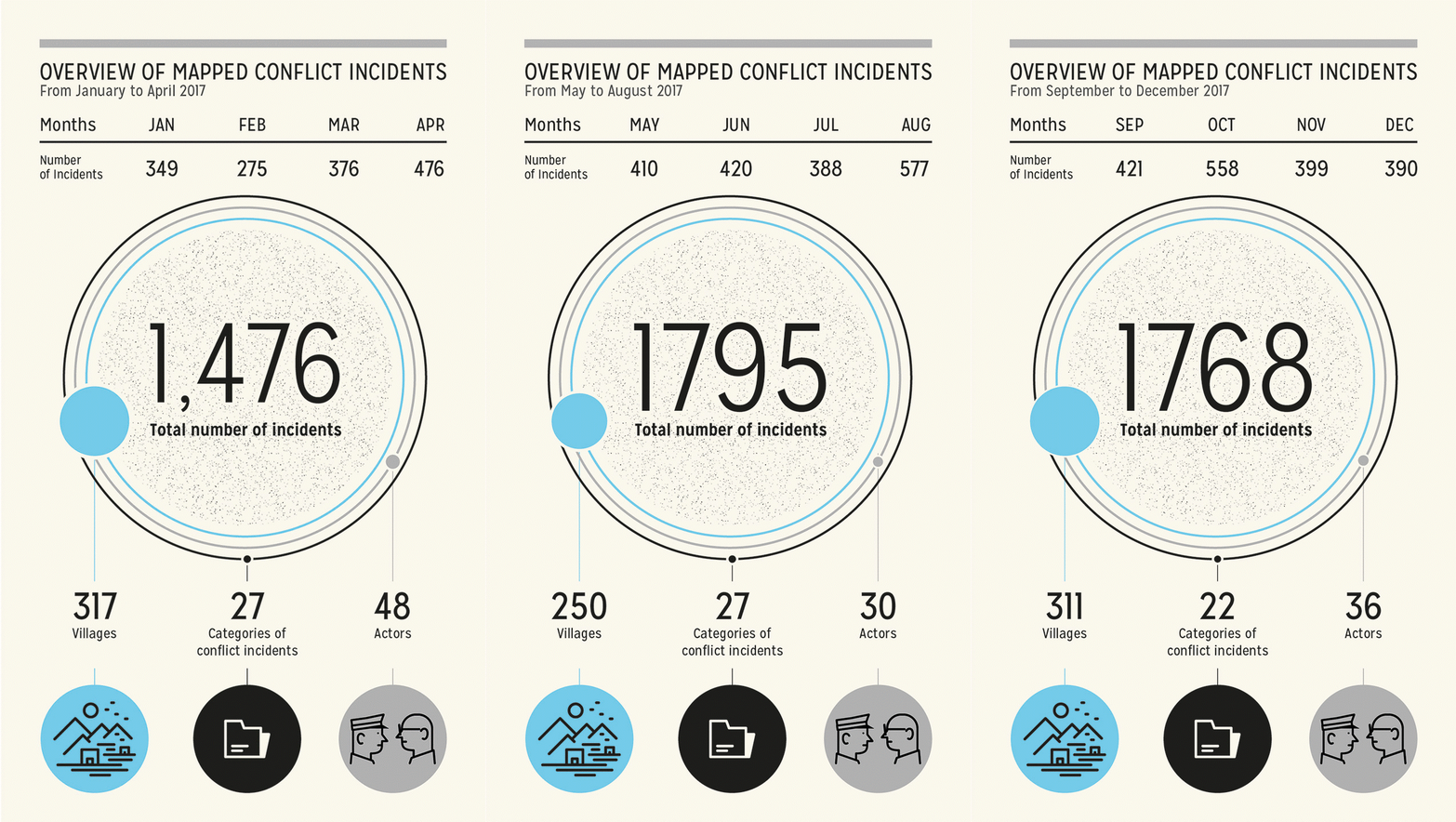
1. Overview of conflict incidents mapped (from January to December 2017)
A total of 5039 incidents were mapped during 2017 which is an increase of 9% compared to the 4605 incidents mapped in 2016. Moreover, 241 incidents have been reported without any identified location provided by the sources. It is also noteworthy that the nature of these conflicts varied depending on their location.
In fact, in 2017, the number of incidents mapped in Sour (687 incidents) increased by 70% compared to 2016 (405 incidents), making the caza the most mapped location during the year. This increase is due to the intensification of Israeli Military’s violations of Lebanese territorial waters and airspace within this area.
Similar to 2016, Baalbeck was the second most mapped location during 2017, with a total of 641 incidents, more than half of which were classified as Power and Governance (377 incidents). These were predominantly related to the LAF operations against armed militant groups and drug dealers in the area. In fact, the strategic location of Baalbeck close to the Syrian borders has it made an operational area for militants belonging to either IS or Jabhat el-Sham (previously al-Nusra) who were notably hiding in the outskirts of Arsal and Ras Baalbeck. In some instances, military operations in the region to arrest suspected militants have led to cases of social discrimination against refugees who are also based in that zone (see more on that in the second section below). In addition to these security incidents, Baalbeck is also notorious for its cannabis (hashish) cultivation, which could explain the significant number of incidents relevant to illicit trade of drugs.
Beirut, which was by far the most mapped location in 2016, was only third for 2017 with a total of 441 incidents. This is a decrease of 46% compared to the previous year (818 incidents). This drop is the result of a significant decrease of state interventions in the area such as the arrest/detention (209 incidents) compared to 2016 (574 incidents).
Although the number of arrests (1521 incidents) in 2017 decreased by 20% compared to the previous year, it remained the most mapped primary category similar to 2016. 40% of the arrests were classified as Power and Governance (614 incidents) mainly relevant to illicit trade or affiliation with armed militant organisations, and 56% to Individual Acts of Violence (860 incidents) related to crimes and infractions such as robberies, murders, shootings and disputes among others. These numbers show that although Lebanon witnessed several security threats in 2017, the majority of the conflicts mapped in the country were mainly relevant to isolated acts such as illegal activities, crimes, and infractions. While Lebanon faces numerous conflicts, fundamental issues such as community safety, rule of law and crime prevention are often overlooked, even though they are grounds for major security concerns.
Focusing on illicit trade, the number of incidents under this category (644 incidents) decreased by 13% in 2017, compared to the previous year (743 incidents). However, in 2016, only 221 incidents were classified as Power and Governance whereas in 2017 no less than 373 incidents fell under this classification. These numbers show that in 2016, the illicit trade incidents mainly involved small human smuggling operations, drugs, and counterfeit money among others, while in 2017 these operations were mostly related to major smuggling networks. For instance, Lebanese customs foiled no less than 15 drug smuggling attempts at Beirut International airport during 2017. Notably, on December 22, 31 kg of cocaine hidden in the luggage of a Venezuelan woman were seized. Indeed, Lebanon is considered as one of the main cannabis producers and exporters worldwide, despite the illicit trade of drugs being strictly prohibited under Lebanese law (See the Conflict bulletin, issue 9 for more on operations relevant to illicit trade of drugs, and the infographic on illicit activities mapped in 2015 here).
The number of shootings mapped in 2017 (499 incidents) remained almost constant compared to 2016 (434 incidents). Most of these incidents were the result of disputes and other Individual Acts of Violence that escalated violently. (See the third visual below to learn more about shooting incidents).
Airspace violations by the Israeli Military increased in 2017 (1,259 incidents) compared to the previous year (955 incidents). In fact, Lebanon witnessed an escalation of tensions with Israel with the latter recurrently launching threats and warnings against Lebanon and Hezbollah. Israel have been notably contesting Lebanon’s offshore energy exploration that is allegedly occurring on disputed maritime territory.
Furthermore, the number of collective actions mapped in 2017 (419 incidents) remained relatively stable compared to 2016 (468 incidents) with a decrease of only 10%. However, 75% of these mobilisations were concentrated between January and June (309 incidents), while the second half of the year witnessed a significant drop in collective actions. In fact, at the end of 2016, after election of President Michel Aoun, the new government issued a series of laws, reforms and other decisions that could explain the rise of mobilisations at the beginning of 2017 that were relevant to these policy decisions. It does seem that at the end of the year, ahead of the 2018 Parliamentary elections, policy-makers have been relatively more responsive towards citizens’ demands, taking action on a few issues, such as a general amnesty for Islamic detainees (read more on this topic here) and solid waste management solutions, among others. Consequently, the collective actions mapped during the last months of the year were mostly episodic and reactive in response to recent developments such as the murder of a woman in Miziara, the decision by President Trump to move the US Embassy to Jerusalem, or Minister Machnouk’s remarks on Uber taxis being unsafe etc.
Finally, the number of gender-based violence incidents reported in 2017 (76 incidents) more than doubled compared to the previous year (29 incidents) with increases in incidents mainly relevant to sex trafficking, domestic violence, and femicides. It is noteworthy to point out that since the amendment of Law 293 in 2014 to protect women against violence, the number of reports for such crimes has been increasing. However, these numbers still considerably understate the scale of the problem given the underreporting of this crime. (See here the mapping of incidents of violence against women in Lebanon). Indeed, reporting violence against women is still considered a “social taboo” despite CSOs efforts to raise awareness about such crimes. All of this indicates the systemic nature of gender-based violence and violence against women in the country. Moreover, experts have been pointing out the gaps within the anti-domestic violence law which prevents women from being fully protected. Consequently, KAFA, a local NGO fighting against gender-based violence, has been drafting an amendment of the Law 293 with the Ministry of Justice and is currently working on referring it to the Parliament.
Similar to 2016, “Lebanese civilians” was the most active actor involved in 1,593 incidents, with more than half of the incidents classified as Individual Acts of Violence (833 incidents). It is followed by the Israeli Military (1,529 incidents) and the ISF (1,092 incidents), as the latter appears to have been actively tackling smuggling operations since the majority of ISF interventions were relevant to illicit trade (366 incidents). Moreover, the number of incidents involving Syrian civilians/refugees (681 incidents) remained almost constant with 2016 (705 incidents) with a decrease of only 3%. Most of these incidents were categorised as arrests (432 incidents) mainly related to illegal stay or suspected affiliations with Jihadi groups.
It is also noteworthy to mention that the number of incidents involving Islamic State (137 incidents) increased by 41% compared to 2016 (97 incidents) due to the massive LAF operations against these militants.
2. Frequency of incidents by primary classification of conflict (from January-December 2017)
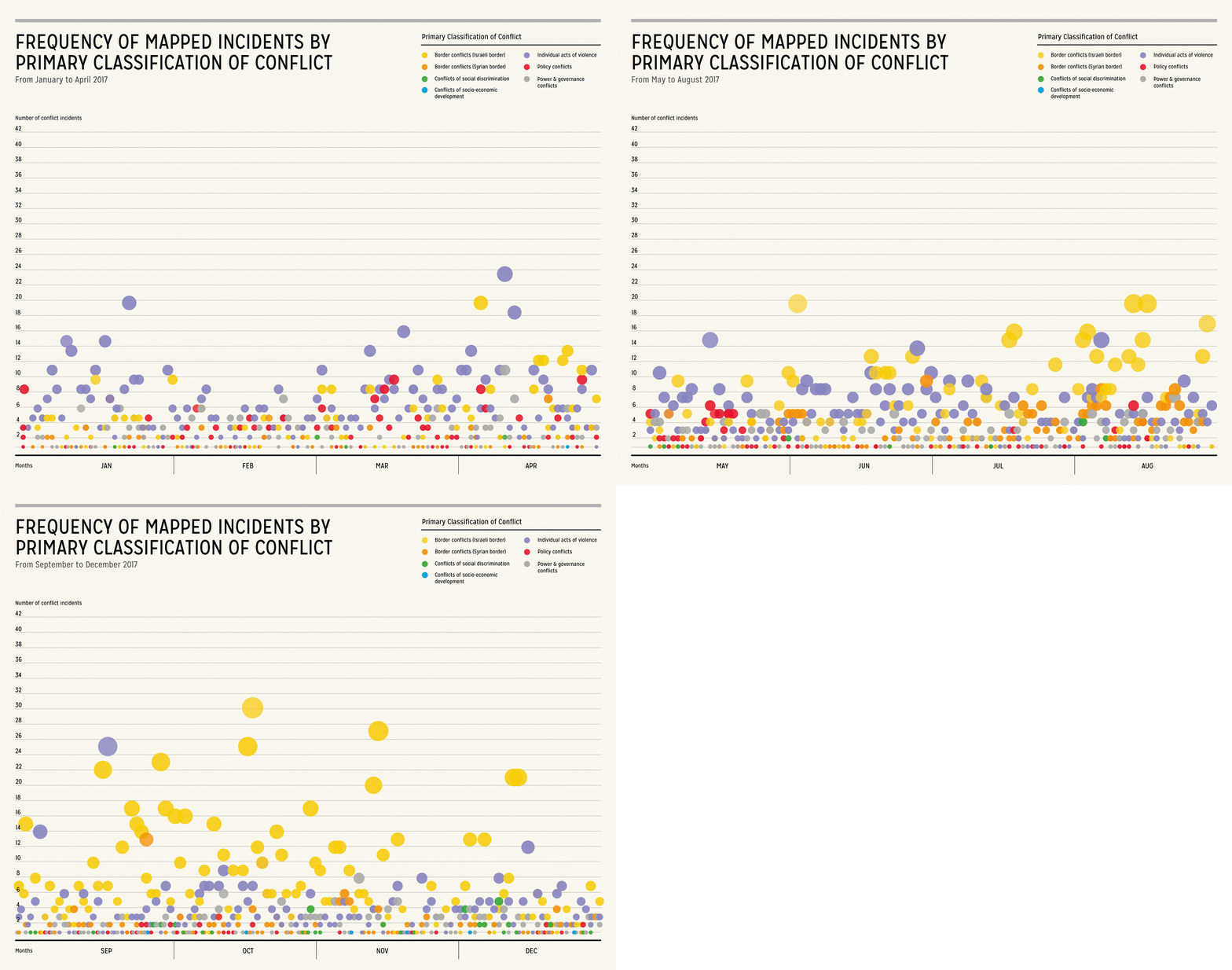
Individual Acts of Violence (1,728 incidents) remained the most frequently mapped primary classification, despite a decrease of 15% compared to 2016 (2,057 incidents). It is followed by Border Conflicts with Israel with 1,701 incidents under this classification which is an increase of 39% compared to the previous year due to the aforementioned escalation of tensions with Israel. More than half of the Individual Acts of Violence were categorised as arrest (888 incidents), 21% as shooting (356 incidents), 13% as robbery (232 incidents) and 12% as illicit trade (211 incidents). It is important to point out that since the appointment of new leadership at the head of security agencies such as the LAF and the ISF in March 2017, the number of wanted criminals arrested seems to have increased notably among individuals who were being protected by connections. More generally, this can suggest a more proactive stance of the Lebanese state security apparatuses to contain widespread criminality.
The number of incidents relevant to the Syrian Border Conflicts (535 incidents) was consistent with 2016 (540 incidents). However, the incidents that were also classified as Conflicts of Social Discrimination as a secondary classification (59 incidents) dropped by 41% compared to 2016 (100 incidents), which means that operations classified as discriminatory against Syrian refugees according to our coding methodology, such as LAF raids on refugees camps resulting in arrests of individuals without legal papers, were less frequent in 2017. This could be explained by the relative improvement of the legal status for Syrian refugees with a decision issued at the beginning of the year that abolished the renewal fees to maintain residency in the country for registered refugees. The decision may appear to have improved the legal situation of many Syrian refugees, contributing to reducing the threat of being arrested for illegal stay. However, it is noteworthy to mention that social discrimination against refugees remains underreported, and that moreover, 74% of the refugees still do not have legal residency.
At the same time, Syrian Border Conflicts that were also relevant to Power and Governance (380) increased by 58% compared to 2016 (240 incidents). In fact, Lebanon witnessed several episodes of violence in 2017 as a result of the Syrian conflict spillover on Lebanese territory. For instance at the end of June, 5 Jihadi militants committed suicide bombings in Arsal which led to the intensification of LAF operations to arrest suspects of affiliations with these militants. Then, two major operations were launched in July and August to definitely expel armed militants from the outskirts of Arsal and Ras Baalbeck, after which the Army was deployed in the areas. The Army continued by arresting militants, seizing weapons and dismantling explosive devices left by these groups.
The number of Conflicts of Social Discrimination (81 incidents) as a primary classification increased by 42% compared to 2016 (47 incidents) and rose to 131 when taking into account the secondary classification. These incidents were relevant to gender-based violence, collective actions, curfews, evictions, and other restrictions on Syrian refugees among others. In fact, after an isolated murder case of a woman in Miziara committed by a Syrian national, tensions have been increasing between host communities and Syrian refugees. Municipalities increased restrictions on refugees while orders for their eviction were also issued in some areas. Moreover, protests demanding the return of the refugees to Syria were organised across the country. However, according to many experts, the negative perception of Syrian refugees is not only attributed to crimes or security incidents. The rise of tensions between both communities can also be mainly linked to the overall deteriorating socio-economic situation in the country, as Syrian refugees are often seen as competitors over jobs. Indeed, several mobilisations took place during 2017 to protest against Syrian economic competition.
Finally, Conflicts of Socio-Economic Development (91 incidents) remained almost constant compared to 2016 (98 incidents), when taking into account both primary and secondary classification, with most of these incidents categorised as collective action. However, new socio-economic grievances have emerged in 2017 that were related to the salary scale, taxes policies, and unfair competition among others, whereas in 2016 these mobilisations were mainly relevant to Palestinian protesting against UNRWA cuts. Also, EDL workers demonstrations rallying for unpaid wages and long-term contracts were less frequent in 2017 (8 incidents) whereas in 2016 they protested no less than 18 times (read more about EDL workers here). This could be explained by the ongoing negotiations at state level during 2017 to implement a salary scale to improve EDL worker conditions.
3. Focus on: Shootings related to Individual Acts of Violence
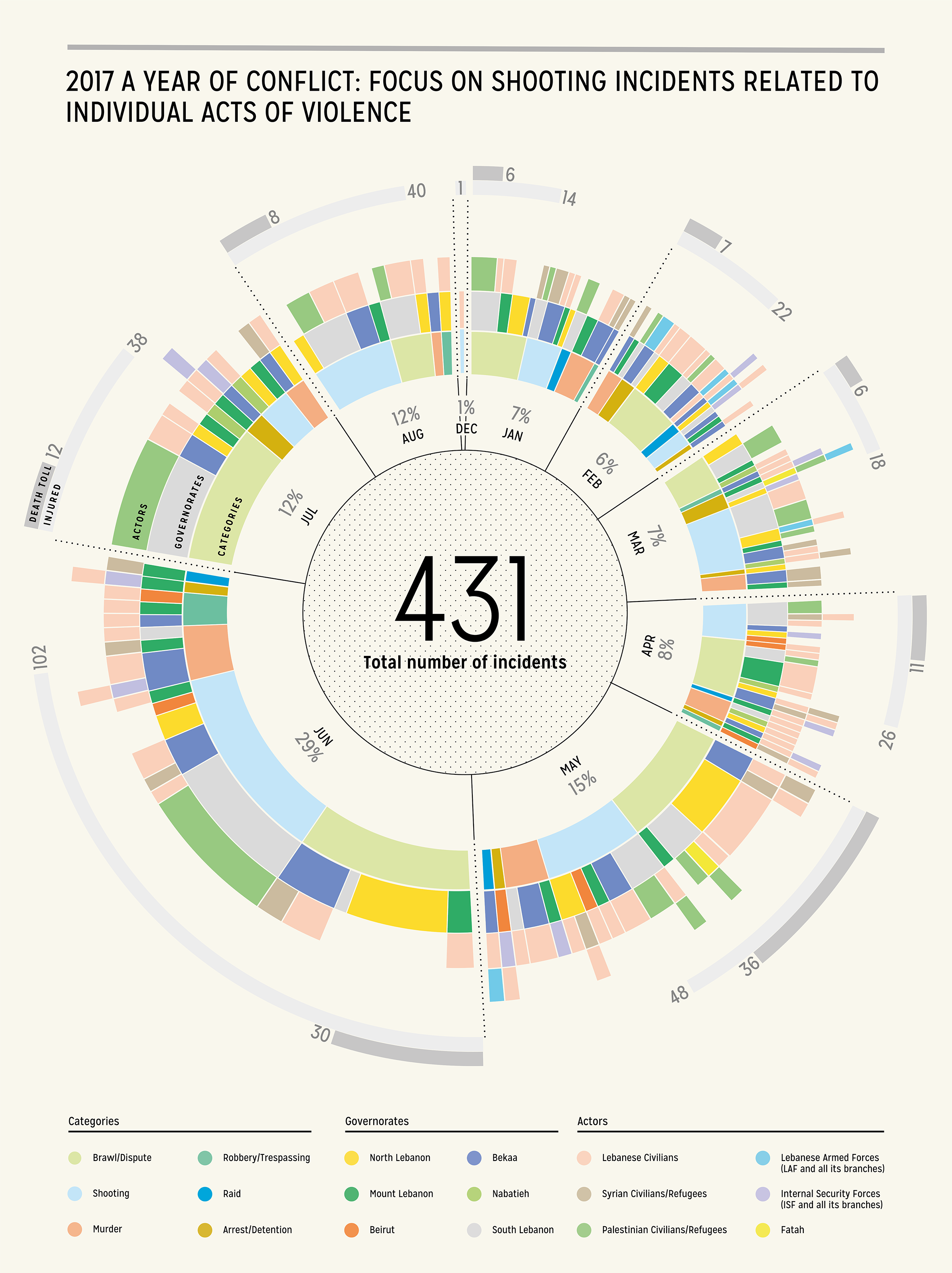
According to the Permanent Peace Movement, there are an estimated 4 million licensed guns in Lebanon, excluding firearms held outside of the legal framework. Moreover, according to Small Arms Survey, the estimated rate of civilian firearm possession (both licit and illicit) in Lebanon was 21 per 100 people in 2005. Consequently, the proliferation of weapons and illegal arms has been an ongoing issue in Lebanon.
In fact, no less than 499 incidents categorised as shooting were mapped in 2017 with 86% classified as Individual Acts of Violence (431 incidents). Most of these incidents were the result of disputes or other tensions that evolved violently, rather than planned crimes such as premeditated murders. This means that such acts could be attributed to the availability and accessibility of guns for citizens. In 2017, the debate about the proliferation of weapons was launched notably after a particular incident moved many in the country. On June 6, 23 year-old Roy Hamouch was shot dead in Jal el-Dib after an altercation with 3 armed men. The reason given by one of his assailants to explain his actions, was disturbing as he later confessed that he was “angry” that night. Afterwards, families of 17 murder victims protested on June 10 to demand gun control, but also fair trials for the murderers who were in some cases protected by political parties.
Therefore, the above-mentioned numbers seem to be indicative of a more important social issue that makes civilians turn to violence in order to resolve disputes.
Indeed, for the past several decades, Lebanon has witnessed recurrent episodes of violence involving clashes, waves of suicide bombings, terrorist attacks etc. as well as major political crises that have all led to instability. This climate of insecurity and socio-economic tension, in addition to the proliferation of arms and weapons, seems to contribute to the emergence of violence among citizens. As a result, hundreds of casualties and injuries due to shooting incidents are reported every year.
It is noteworthy to mention that 50% of the shooting relevant to Individual Acts of Violence (216 incidents) involved Lebanese civilians whereas 24% of such incidents involved Palestinian civilians (105 incidents) and 9% Syrian civilians (37 incidents).These numbers contradict some statements attributing the rise of crime rate to the influx of Syrian refugees.
In the same vein, most of the incidents involving Palestinians were located in Ain el-Helweh camp (63 incidents) where the security and economic situation remains fragile.
Besides these crimes, the “culture” could also play a role in the proliferation of weapons. In fact, celebratory shootings remain a widespread tradition in the country, although this practice is illegal in Lebanon. In practice, gunfire is often shot in the air as a means of celebration during weddings, politicians’ speeches, funerals, elections, graduations, etc. This is illustrated by the peak of shooting incidents during the month of June, which coincides with the announcement of official exams results as well as the beginning of the “wedding season”. Although shots are fired in the air and do not target a specific person, they still cause a number of casualties. Even though authorities have been raising awareness about celebratory shootings while pursuing perpetrators of such acts, many of them remain protected by politicians and are therefore able to escape judicial penalties.
Finally, it is noteworthy to mention that several incidents of shooting were the result of more intense conflicts such as clashes, arrests of armed militants, or gunfire targeting state security apparatuses such as the ISF or the LAF. Indeed, 65 shootings were classified as Power and Governance as they were considered as a threat to the State central power.
4. Focus on: a year in review
The following three visuals titled “Focus on conflict incidents in Ain el-Helweh”, “The Lebanese Army operation against Islamic State” and “Focus on illicit trade related arrests/operations” were featured in Lebanon Support’s three Conflict Analysis Bulletins of 2017 (issue 7, 8, and 9). A brief description of each visual is found below and are discussed in greater depth in their respective bulletins.
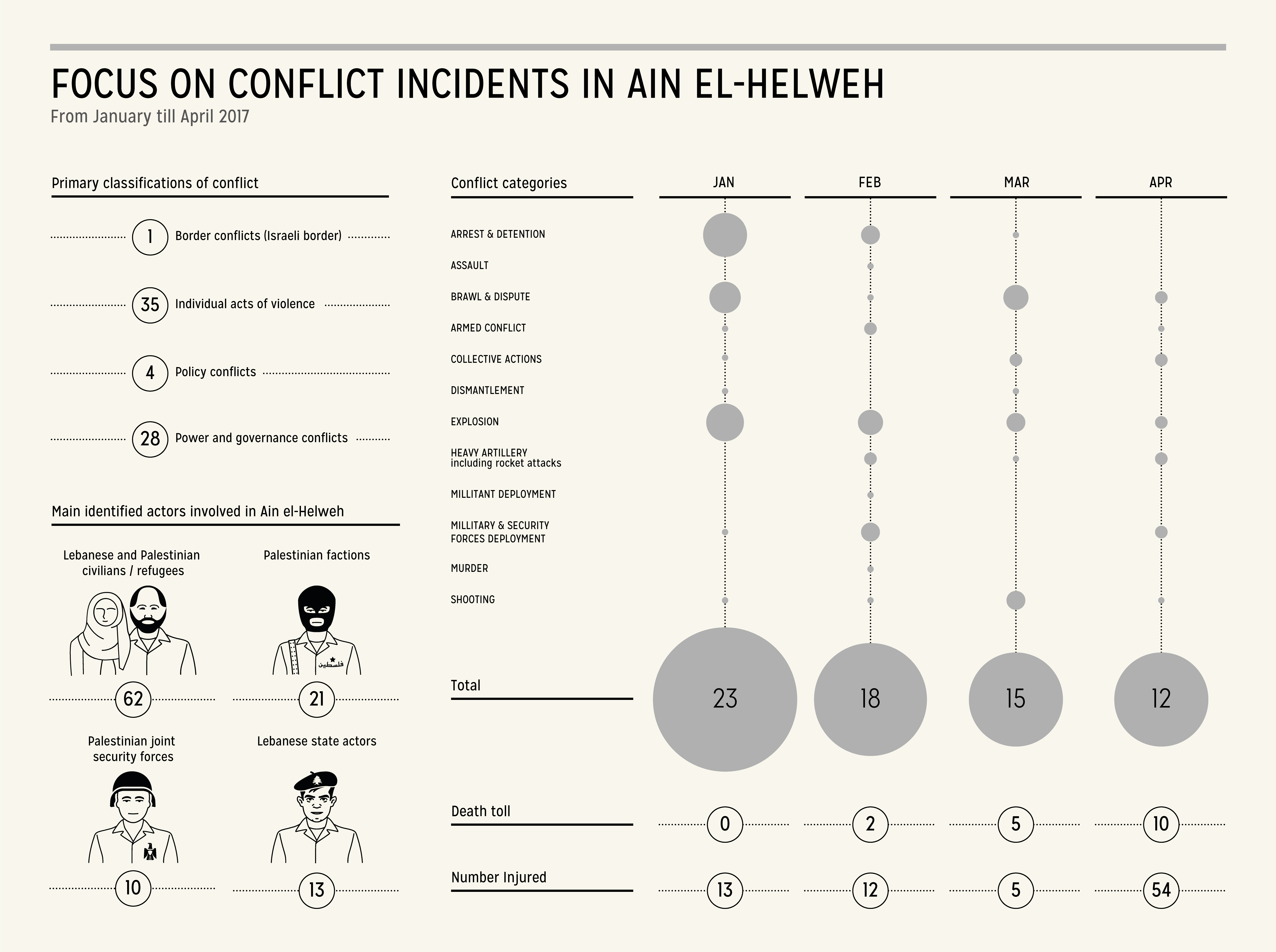
Featured in the 7th issue of Lebanon Support’s Conflict Analysis Bulletin, the above visual focuses on the escalation of violence within Ain el-Helweh refugees camp during the first third of 2017. It also highlights the categories of conflicts during each month as well as the actors involved in the conflicts.
In fact, socio-economic insecurity and continual tensions relevant to armed militant and political factions in Ain el-Helweh have perpetuated a volatile security environment. Therefore, conflict incidents in Ain el-Helweh have been on the rise since late 2014, with alternating periods of resurging violence and relative calm. During the first third of 2017, the camp witnessed a significant escalation of tensions with recurrent armed clashes between Palestinian factions.
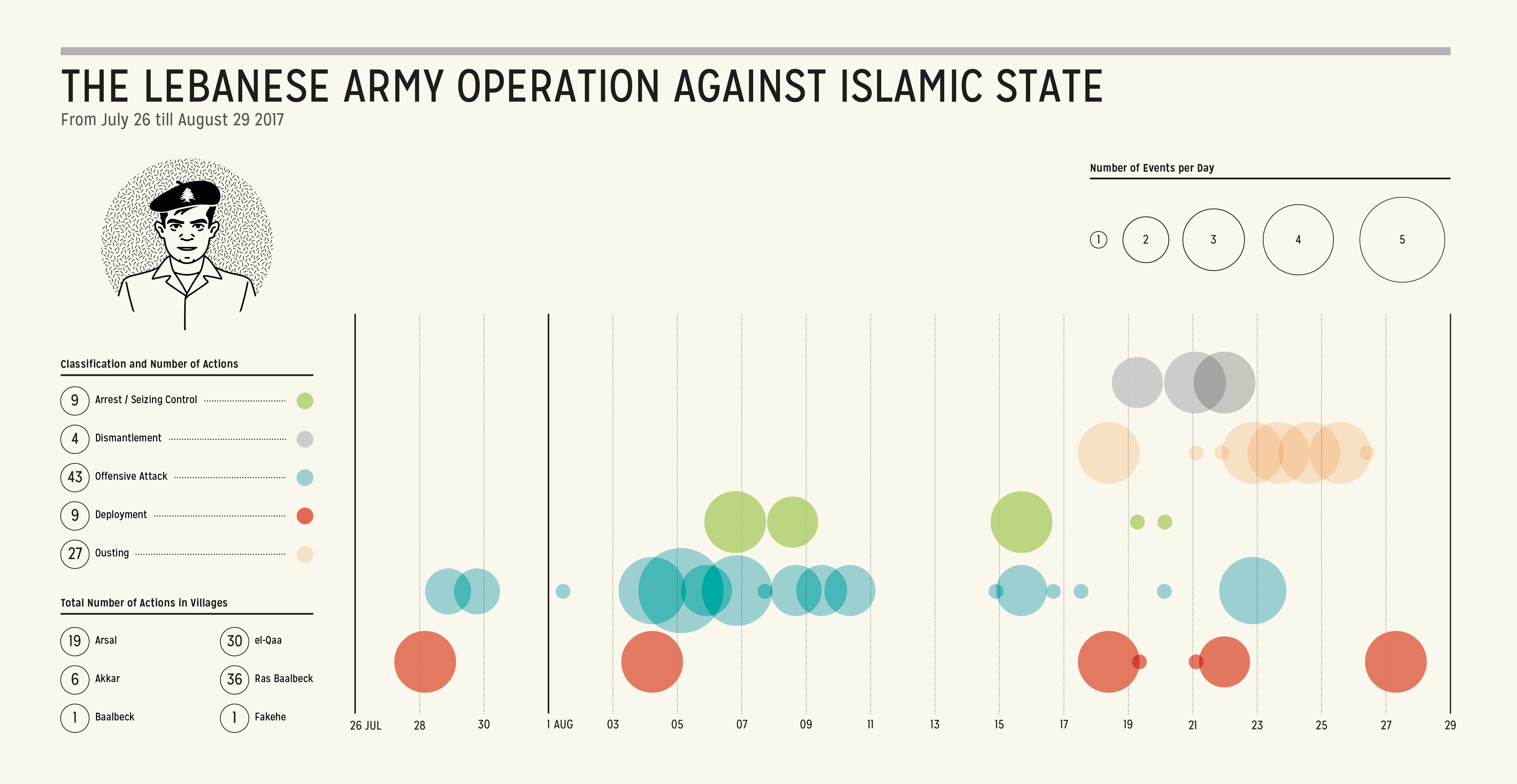
Featured in the 8h issue of Lebanon Support’s Conflict Analysis Bulletin, the above visual focuses on the LAF operation against Islamic State in the outskirt of Ras Baalbeck on August 2017. While the shelling of militants’ posts has been recurrent but occasional since 2014 in this area, it was not until August 2017 that the Army launched an offensive against these militants’ positions in order to expel them from the outskirts of Ras Baalbeck.
The visual follows the daily evolution of this offensive that led to the ousting of the armed militants from the area.
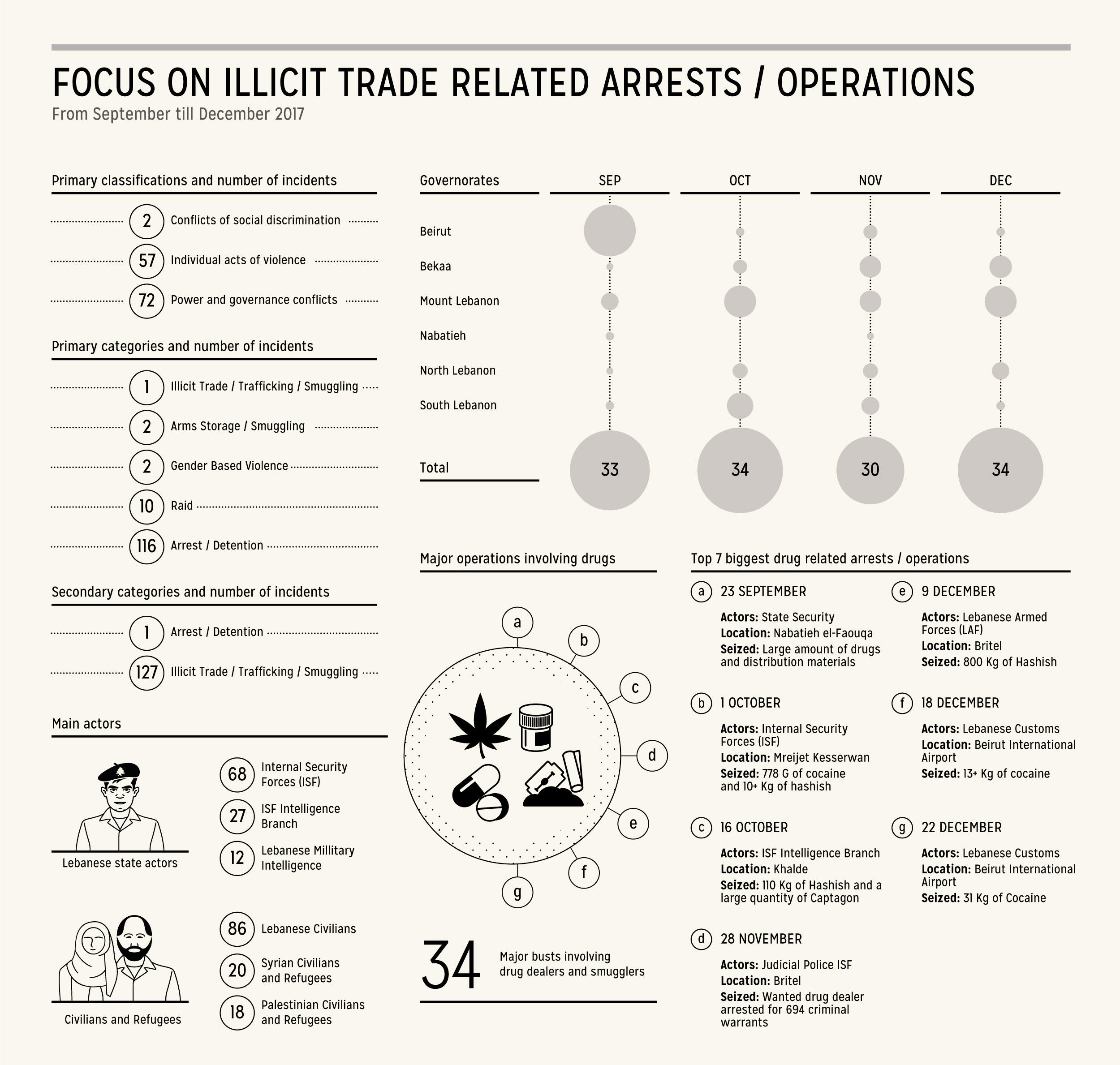
Featured in the 9h issue of Lebanon Support’s Conflict Analysis Bulletin, the above visual focuses on the illicit trade related arrests/operations. It highlights the main actors involved in such operation and focuses on the major smuggling operation during the last third of 2017.
In Lebanon, the use of illicit drugs is severely prohibited under the Lebanese law and the state has been attempting to eradicate drug production for decades. Indeed, security apparatuses such as ISF, LAF, and the Lebanese customs among others, are recurrently arresting civilians on charges of drugs possession and smuggling. However during the last four months of the year, authorities seemed to have been targeting prominent drug rings.